
|
back to www.audiodesignguide.com |
To get more information contact me at: webmaster@audiodesignguide.com |
Hybrid Class D
End system
Apr 2026


INTRODUCTION
After the incredible performance of our
last
Hybrid Class D system, we’ve reached the next level.
We’ve combined a
pure, single-ended Class A tube stage with an interstage transformer to deliver
a perfectly balanced signal directly to the Class D chip.
It’s the ultimate
tube-stage upgrade for any balanced Class D amplifier.
The main features
are simplicity, extreme sonic performances and perfect instrumental
measurements.
No opamp (operational amplifier removed on SylphAudio module)
No global feedback
No noise
No relay and fuse on the signal path
Only one capacitor on the signal path (ELNA Silmic II)
Very high slew rate
Very low distortion until 170W on 4ohm
Only one tube on the signal path
Very short internal wiring
Vaccum tube pre-ampl with very low distortion also at 2 x 6Vrms
Vaccum tube pre-ampl with a voltage gain from 13 to 21dB
Frequency band 20Hz - 20Khz at 0dB
Single chip class D section
No fuse and no relay on the signal path
Passive CLC power supply for the driver stage with channels separation
FINAL RESULT
Over the last few years, I have tried many
Class D modules, including
IcePower,
Tripath,
Hypex,
NewClassD, and
Pascal
Audio, but none of them delivered a sound quality that could match a good Hi-End
Class AB amplifier. However, simply listening to a TPA3255 mounted in a
Fosi Audio V3
upgraded with high-level op-amps is enough to make anyone change their mind
about the potential of Class D.
In comparison with all my previous builds,
including the
Power
Follower,
Amplifier End Circlotron, and the
last High Power
Hybrid, this amplifier offers a very compelling set of technical and sonic
traits. It is certainly my most refined Class D implementation to date,
challenging some of the best attributes of my traditional solid-state and hybrid
designs.
We can always appreciate the aesthetics and the romantic feel of
having an OTL,
a pure SE
class A, a beautiful
KT88
push-pull, or a single-ended
2A3/845
amplifier, but if we strictly analyze the sonic performance, this
Hybrid Class D system and the
previous delivers a level of transparency, control, and realism that
fundamentally challenges those classic topologies.
This doesn't mean you can
just buy a cheap TPA3255 module or a Fosi Audio V3 and get the same results of
these my class D projects.
This level of performance was achieved by meticulously selecting and tuning
every single component in both the driver stage and the Class D module. Any
modification would compromise the final result.
As I will discuss further
on, I have tested almost every TPA3255 module available on the market, including
the latest releases. None of them, however, come close to the performance
achieved with the SylphAudio boards.
This is undoubtedly a financially demanding project. It only makes sense to
build it if you have a high level source and intend to drive it directly, without
using a preamplifier.
The previous version without the interstage
transformers is still good, but it has a slightly less natural sound, probably
because it is affected by the sonic characteristics of the interstage MKP
coupling capacitors.
I have driven various speakers without problems, only
one channel of the ESL63 went into protection during power-up but I think that
speaker has a problem and in the future I should analyse the impedance of these
ESL.
SCHEMATIC
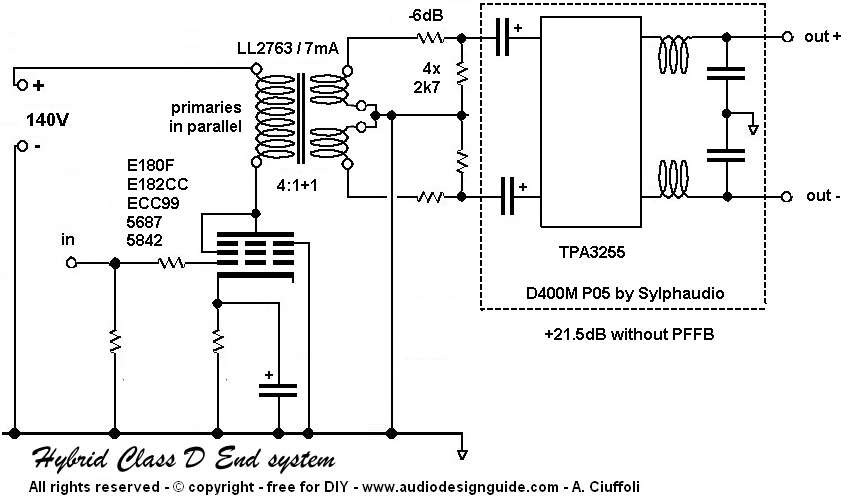
Is this a simple project? Technically, yes,
it is remarkably straightforward. However, achieving flawless sonic and
instrumental performance requires high-end components with no compromises.
As detailed below, I have analyzed the specifications of nearly 50 interstage
transformers from various manufacturers. In the end, I selected the one that
delivered the most superior results.
I was looking for an inductance value
higher than 50H with an air gap capable of supporting 14-20mA with a primary DC
resistance not exceeding 1/10 of the internal resistance of the tube used,
therefore < 300ohm.
TUBES
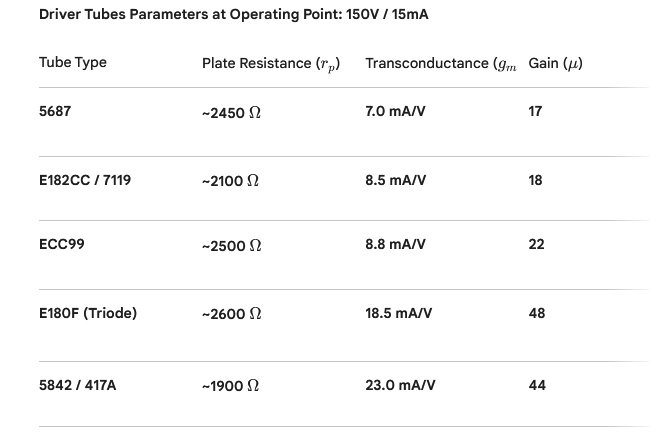
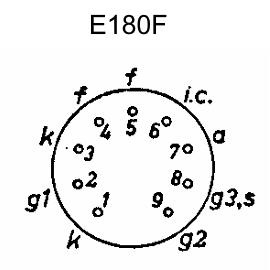
In this project, I have chosen to use the E180F in
a triode-connected configuration.
Instrumental tests and sonic performance
proved it to be the best-in-class, despite its excessively high voltage gain.
To manage this, a dedicated attenuator stage is required, similar to the
solution implemented in my previous design.
These tubes are readily
available as New Old Stock (NOS), with high-quality options from manufacturers
like Siemens and Mullard.
The primary alternative is the 5687, which is
significantly more expensive and harder to source.
However, the 5687 offers
a distinct advantage: a single tube can serve both channels, and its lower gain
profile eliminates the need for an attenuator.
I am not a fan of the sound
produced by the Russian equivalents of the E180F; although they are quite
detailed, they tend to sound harsh.
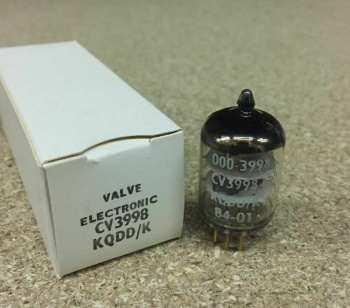 E180F
- CV3898 old Mullard (single pentode)
E180F
- CV3898 old Mullard (single pentode)
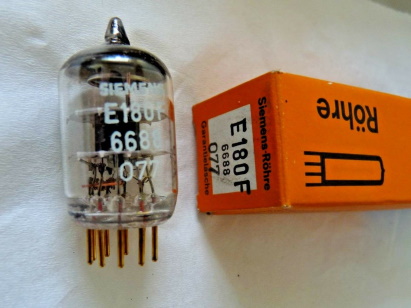 E180F - 6688 Siemens Gold Pins New Old Stock
(single pentode)
E180F - 6688 Siemens Gold Pins New Old Stock
(single pentode)
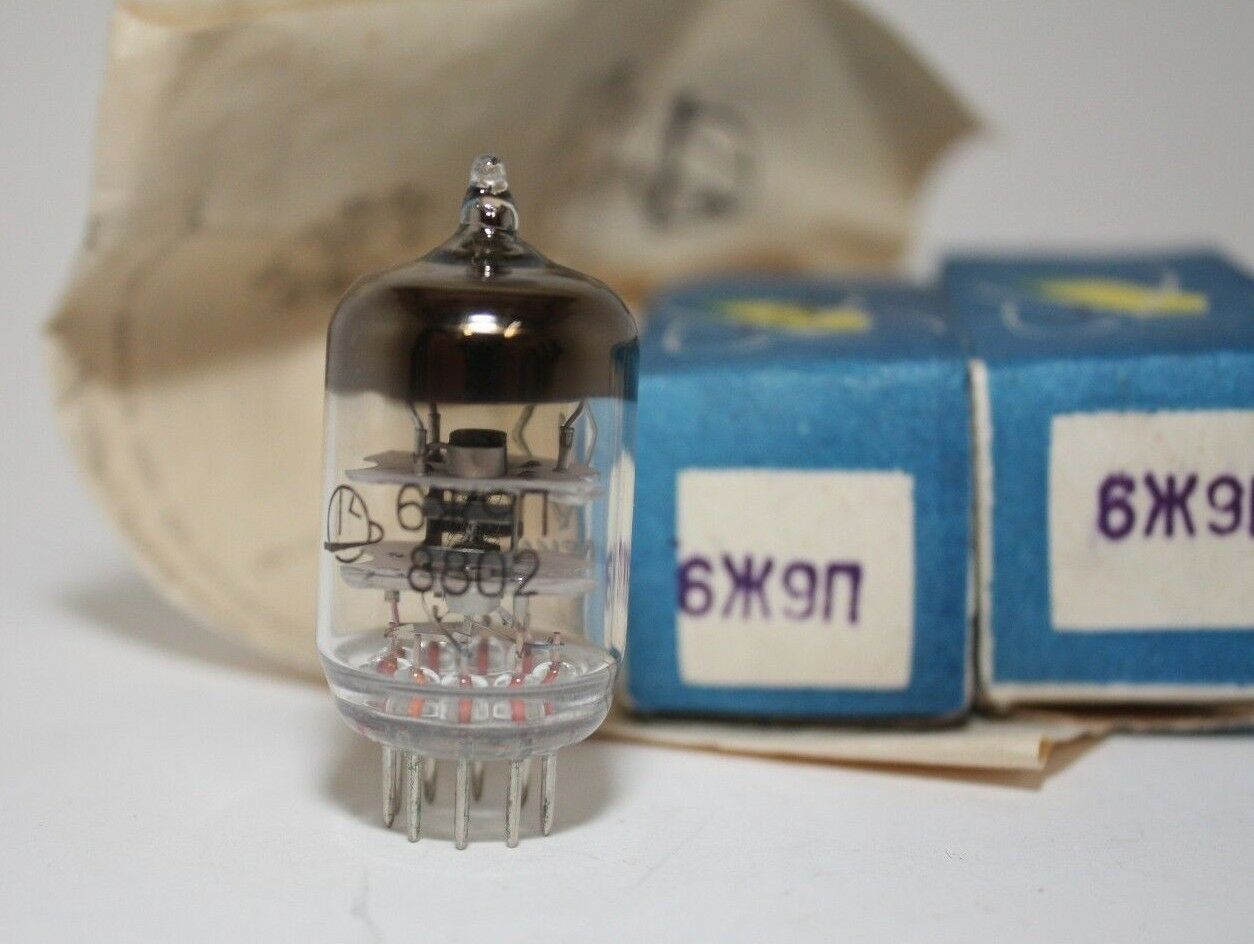 6Z9P - 6ZH9P -
E180F (single pentode)
6Z9P - 6ZH9P -
E180F (single pentode)
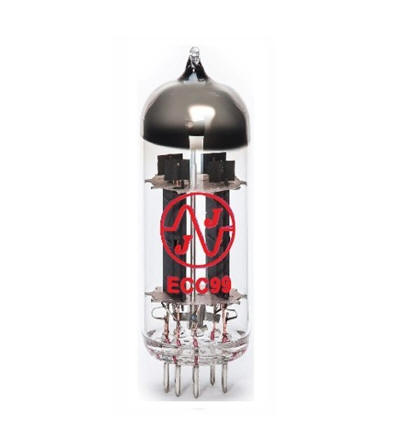 ECC99 by JJ (dual triode)
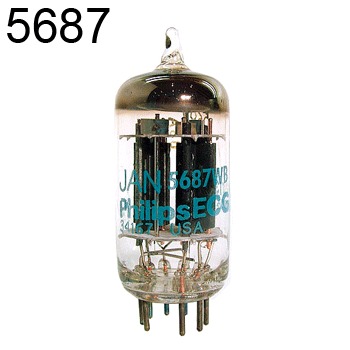 5687 Jan Philips (dual triode)
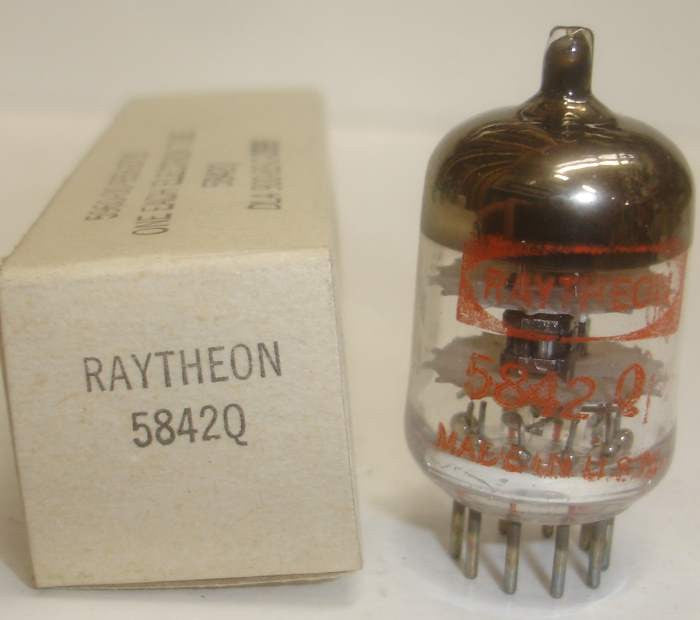 5842 Raytheon (single triode)
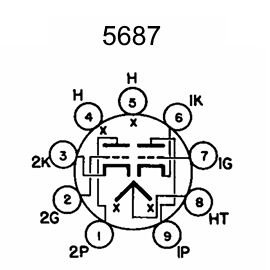
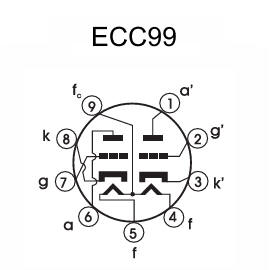
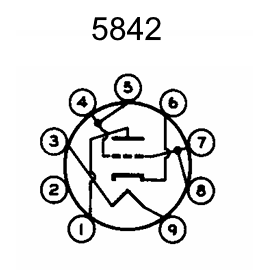
INTERSTAGE TRANSFORMERS
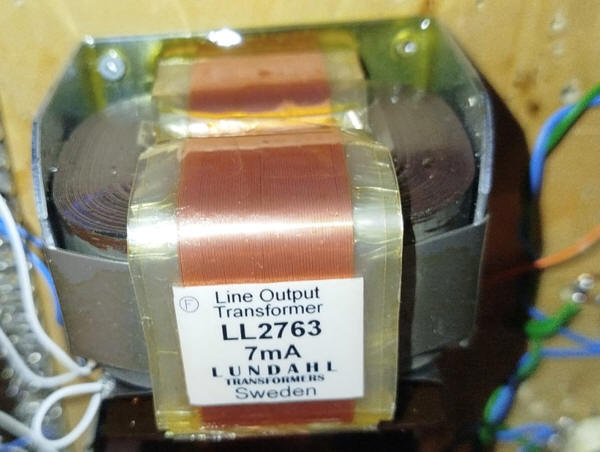
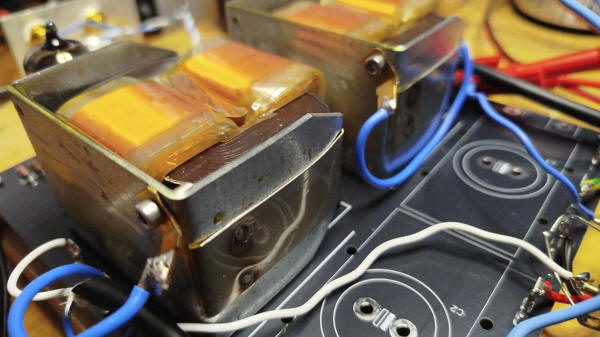
In this project, I utilized the Lundahl
LL2763/7mA for the first time.
After an extensive
market review, this component was chosen to satisfy the following technical
requirements:
High Inductance: To ensure a good low frequency band
Air gap designed for a minimum of 14mA to use high transconductance tubes
DC resistance no more than 1/10 of the tube's internal resistance to minimize voltage drop, improve efficiency and obtain a good slew rate
The LL2763/7mA with primaries in serie have a primary inductance of 280H but if we connect the primaries in parallel we have 280 / 4 = 70H, air gap for 14mA and Rdc=270ohm.
This specifications are better than LL1671/20mA with 52.5H Rdc=312ohm and than LL1689/9mA primaries in parallel with 45H Rdc=327ohm
Ft(-3dB) = R / (2 * 3.14 * L) = (2400+ 327) / (2 * 3.14 *70) = 6.2Hz
This Lundahl LL2763/7mA is available in 3 versions:
Silicon-iron (STANDARD)
Amorphous-iron (AM)
Nanocrystalline (NC)
Now I'm using the standard version, but I've also tried the AM version in the past, and I think the increased sound performance justifies the price difference.
I've never tried the NC version, so I can't comment on that.
CAPACITORS
Regarding the Ck capacitors,
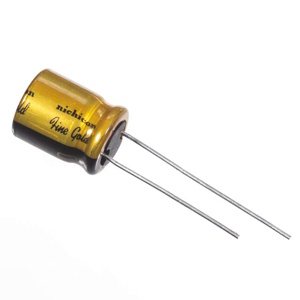
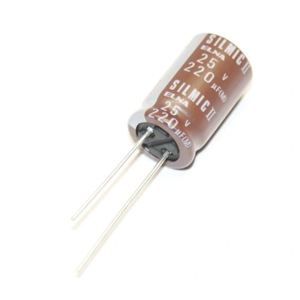
I have chosen the ELNA Silmic II since the
Nichicon Muse series has been discontinued.
POWER SUPPLY FOR DRIVER STAGE
I have tested these power supply for the vacuum stage driver stage:
1) Virtual battery like the previous Class D project
2) Regulated with feedback near to Maida design
3) Pure CLC like the best Single Ended vacuum tube amplifiers
Only with the third type you get a total naturalness of sound so my choice is
this one also because we are creating an extreme project without compromises.
Obviously the quality of all the passive components must be of the highest
level without looking at the costs.
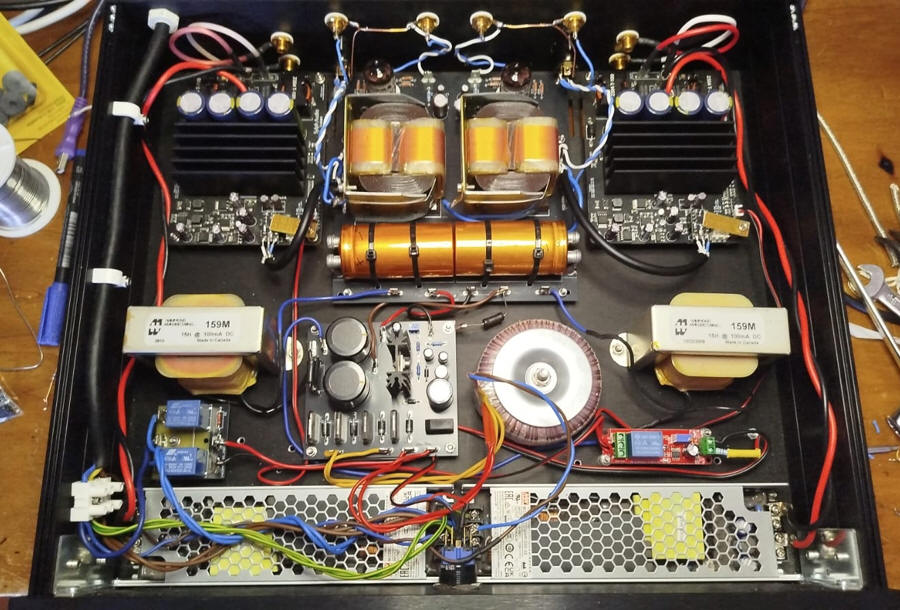
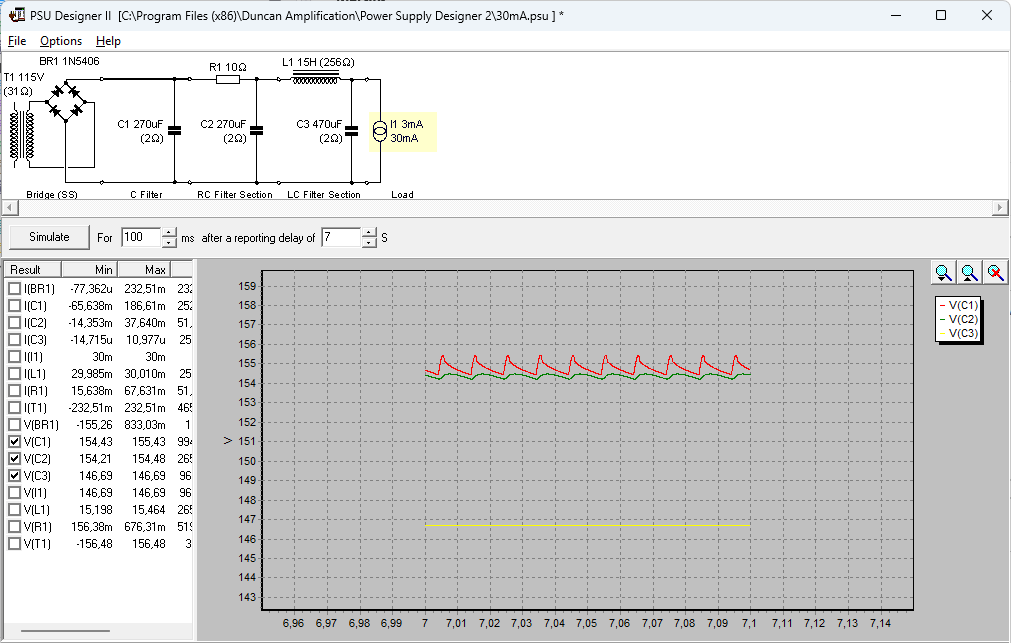
The Hammond
choke 159M with 15H Rdc=256ohm and able to support a dc current of
100mA are my first choice.
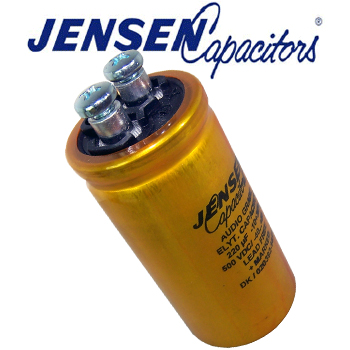
I have identified these models on the market because the Jensen electrolytics are no longer in production.
 |
 |
 |
 |
 |
 |
In a single-ended stage, the
quality of the filter capacitor following the choke is critical, as it
significantly impacts the sonic performance.
I have a pair of vintage Jensen capacitors, and I'll
be installing them first as they are my absolute benchmark for audio quality.
I tried looking for
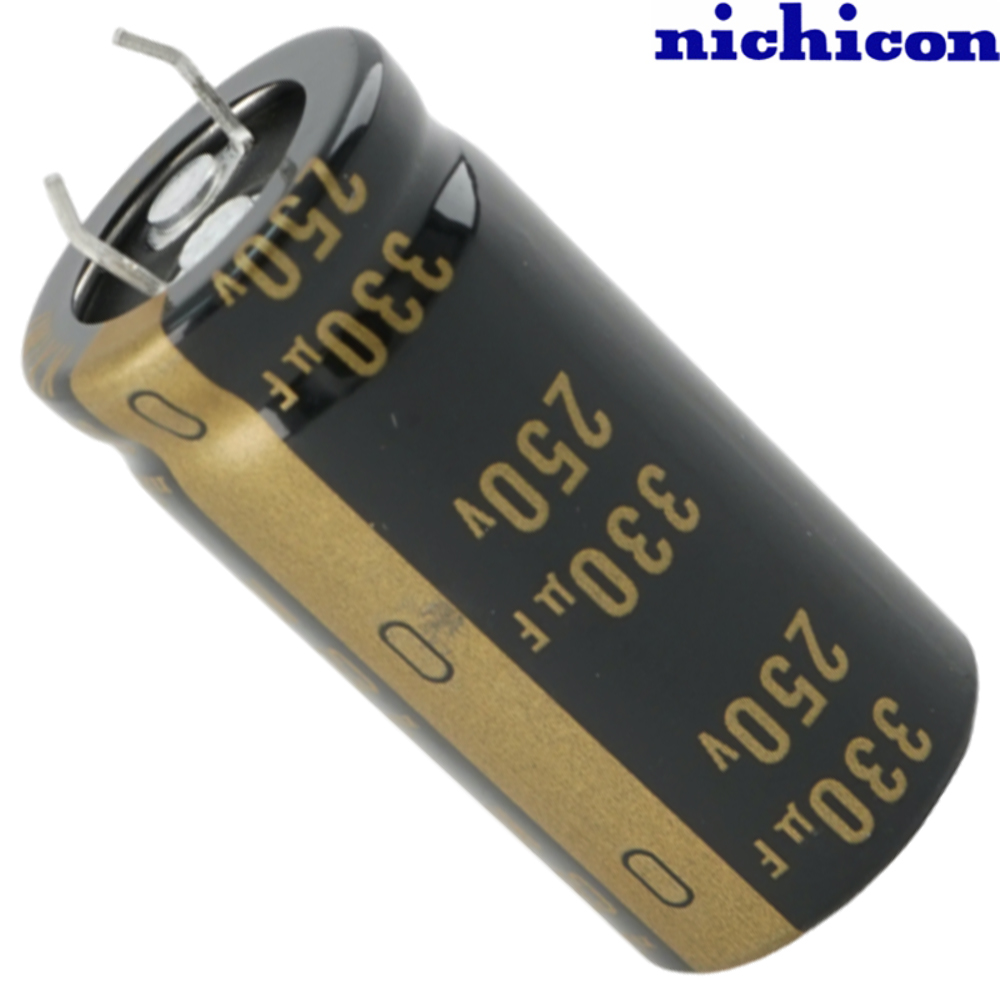
some reasonably priced alternatives on the market, such as the
Kemet (ex BHC) ALS30,
Nichicon KX and large 100uF MKP, but the
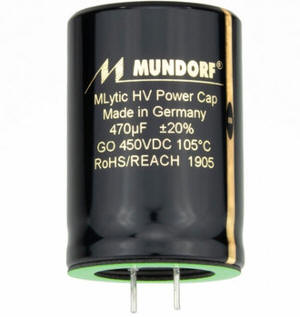
results were disappointing. In the past I tried also the
Mundorf MILytic HV, these are precise and dynamic, but the sound is very
cold and hard.
I
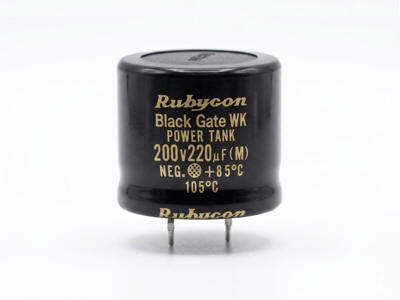
recovered some vintage Black Gate WK from my own personal stock at home,
enabling a rigorous comparative test with a friend.
With both the Black Gate WK
and Jensen caps, the output remains remarkably transparent and organic, even
under complex signal loads. The Black Gate WK, however, offers a subtle edge in
terms of resolution and detail.
With the other capacitors, there is a substantial
alteration of the signal. While this might seem positive on some tracks—making
them sound more open and spacious—as soon as we switch to complex signals, the
result becomes almost unlistenable.
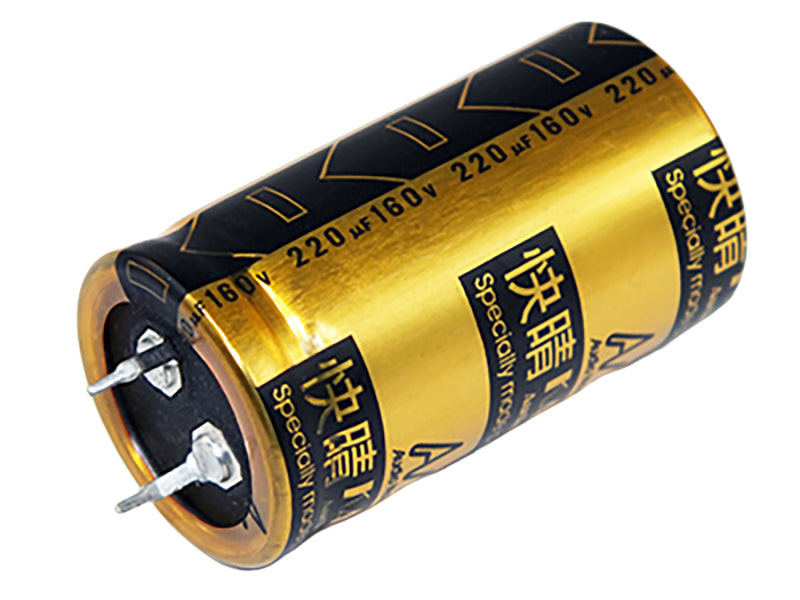
At this point, the only viable option is
to install a pair of 220uF 160V Audio Note Kaisei
capacitors, which are claimed to be manufactured with a structure very similar
to the vintage Black Gates.
I also tested the frequency response and sonic performance with
both 470µF and 220µF, but there was no discernible difference.
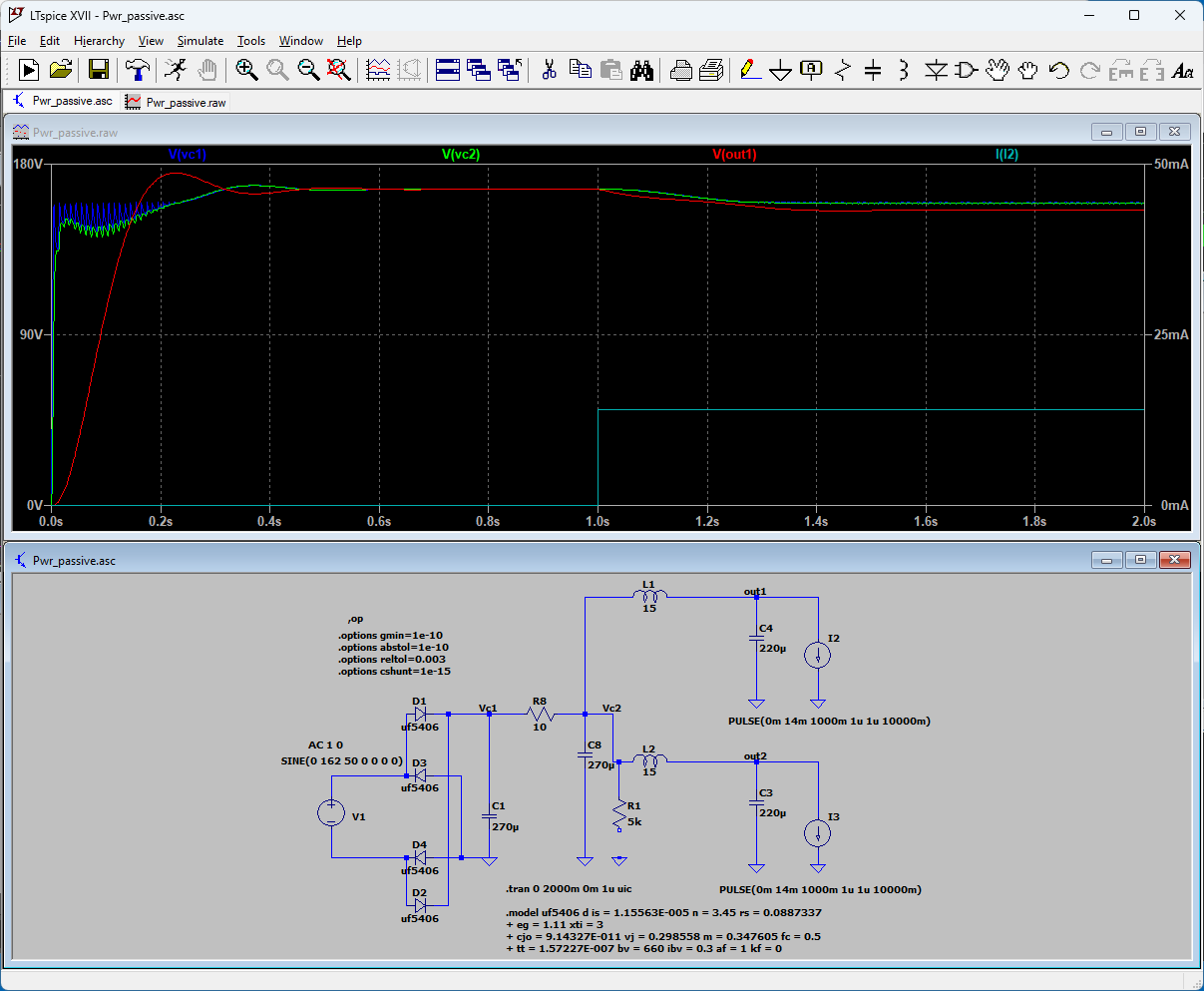
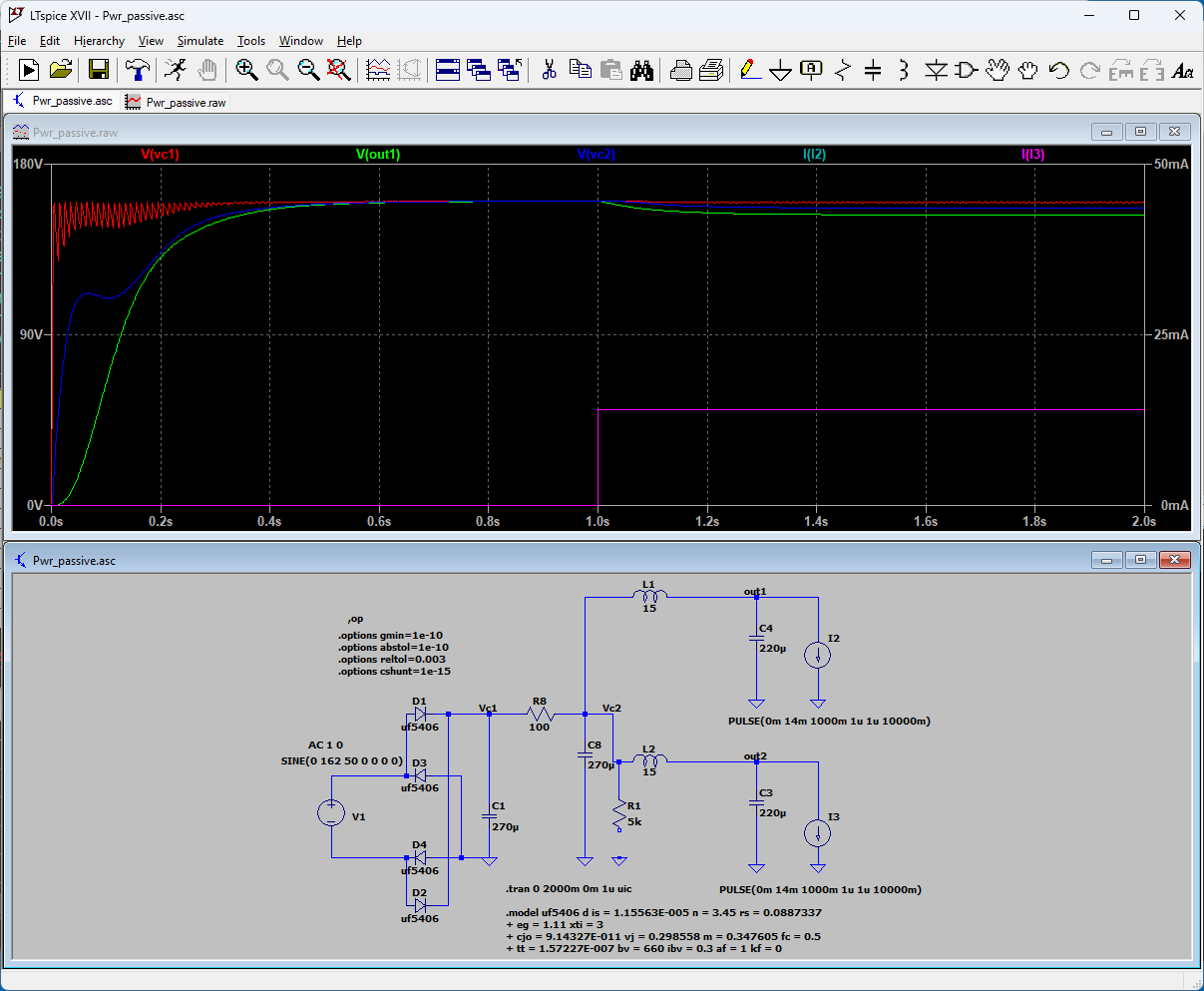
I noticed a
180V overshoot at power-on during simulation. To protect the 160V capacitors, I
increased R8 to 100 Ohms; this fixed the spike at the cost of a minor reduction
in B+ voltage (sim0 and sim1).
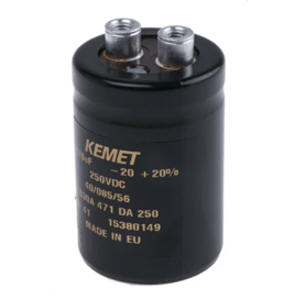
The first 2 capacitors are ALC70A271BB250 270uF 250V with snap-in chassie.
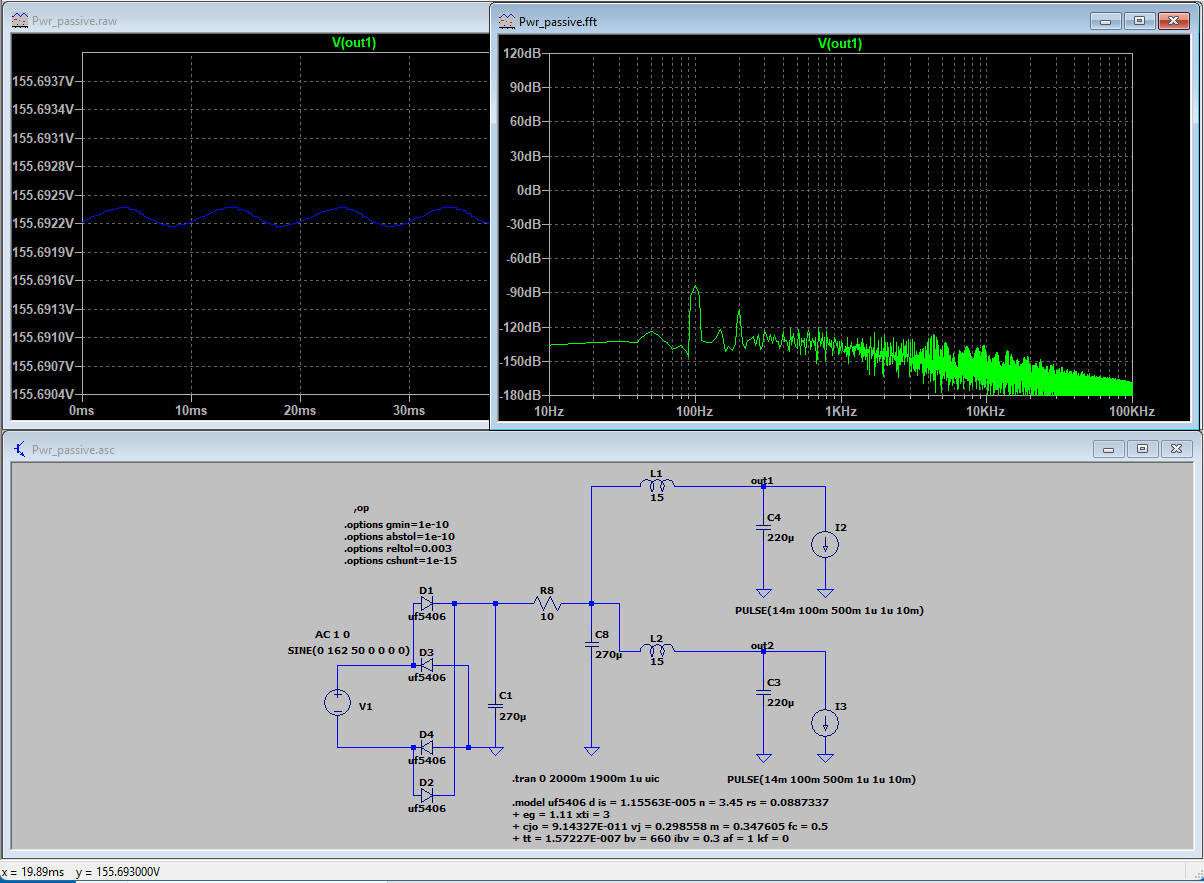
Residual noise with output cap. 220uF pure 100Hz sine wave at -83dB (215uVpp) and with 470uF -90dB (115uVpp).
About the transformer to use for the driver section I
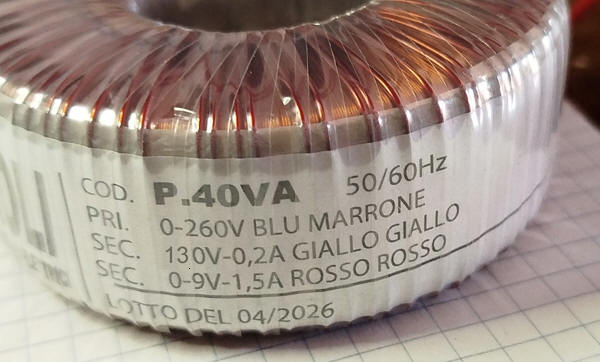
have used a custom toroidal on my specifications.
The primary and
secondaries has been calculated for 260V instead of normal 230V to keep the flux
very low.
primary 260V
secondaries 0,2A 130V 26VA and 1,5A
9V 14VA total power 40W
the real output will be 115V so if you think to use the Audio Note Kaisei with only 160V reduce secondary of 5%.
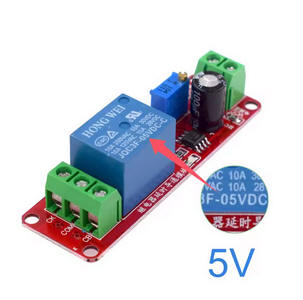
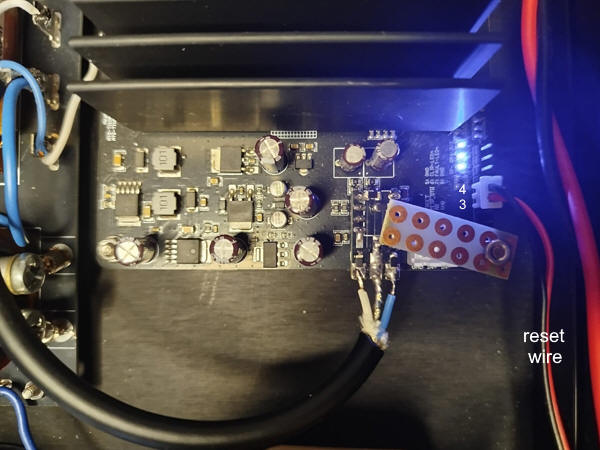
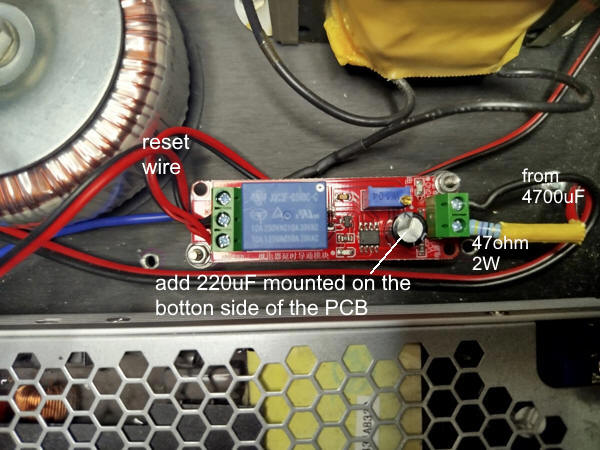
In order to
eliminate the little bump on power-on and power-off phase I use a
NE555 timer modules
to add a delay on reset button of the Class D modules.
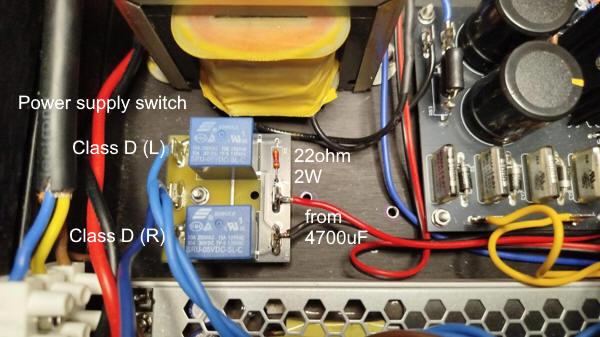
Add a 47ohm 2W resistor in
series with the power supply to have 5V from the 8.5V DC get on the 4700uF
capacitor of the filaments.
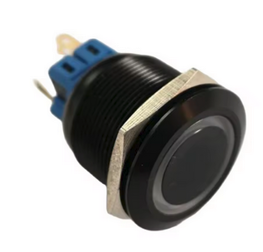
I have used a 22mm Waterproof Ring Illumination Black Anti
Vandal Push Button Switch, Blue,
1NO1NC Latching, LED voltage
6V.
Add a series resistor to the LED to adjust the brightness to your
preference.
OUTPUT STAGE
The TPA3255 is used in many modules with
significant price differences starting from $30 but only very few modules can we
consider serious products for hi-end systems.
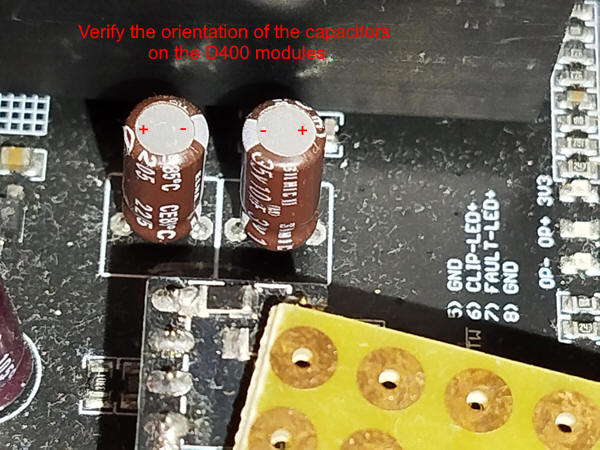
In order to integrate
theTPA3255 modules with the tube preamplifier without using an opamp it is
necessary that the modules use a dual power supply for the original driver so
the decoupling capacitors are oriented in the correct direction (positive
connected to TPA input).
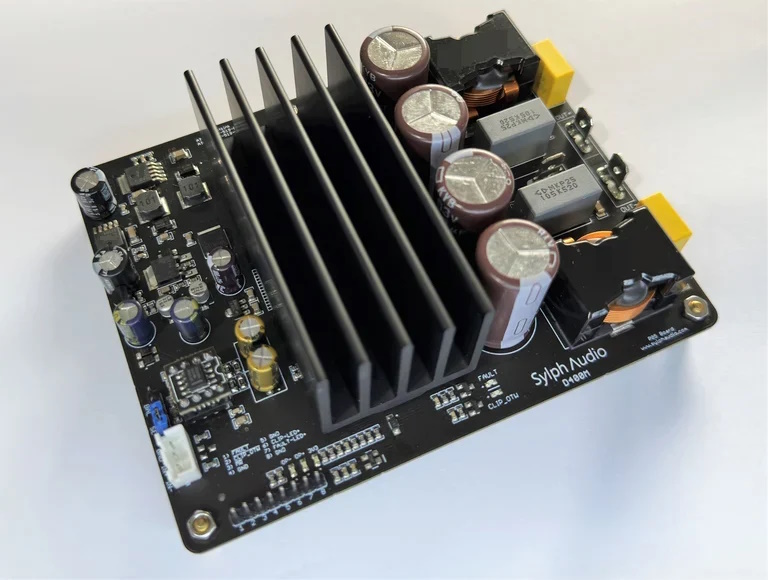
The best module I found for this project is the D400M P05 produced by Sylphaudio with these main specifications:
TPA3255 in a mono PBTL with or without PFFB
input balanced or un-balanced
opamp with split supply design so dual power supply +12V and -12V
2Ω load capability
Footprint: 130mm x 100mm x 45mm (L * W * H)
Overcurrent /short protection
Over voltage protection
Overheat protection:
Turn on-off pop suppression
The main differences from the Fosi Fox v3 are these:
the use of one chip for each channel in PBTL
the use of dual power on the driver stage
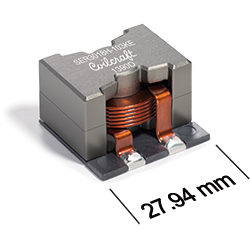
Output filter with Coilcraft SER3018H 2.56mohm instead of Sumida DEP1519 16.6mohm
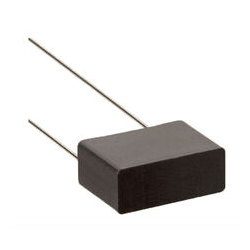
Output filter with 1uF Panasonic MKP ECWFE instead of Wima MKS 2
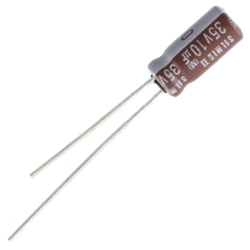
Interstage capacitor 10uF ELNA Silmic II instead of ELNA RA3
POWER SUPPLY FOR POWER STAGE
Regarding the power supply, there are numerous companies that
build switching power supplies but I chose
Meanwell products because I needed a reliable product that does not cause
problems over time.
The first tests were done with LRS-150-36 power supplies
and then I switched to the
UHP-200-48 resonant design (LLC) model with also PFC.
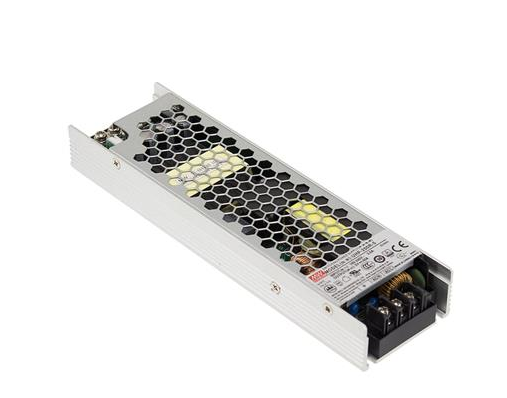
There is a huge difference in the sound by switching to the new Mean Well UHP, many harshnesses disappear and you feel a sensation of extreme cleanliness with absolute silence in the background.
CABLES
The internal cables used are the Canare L-2T2S High performance Microphone cable shielded 0.26mm² and 4S11G STAR QUAD Speaker cable OFC Copper 4x2.08mm², both with with insulation PE Polyethylene.
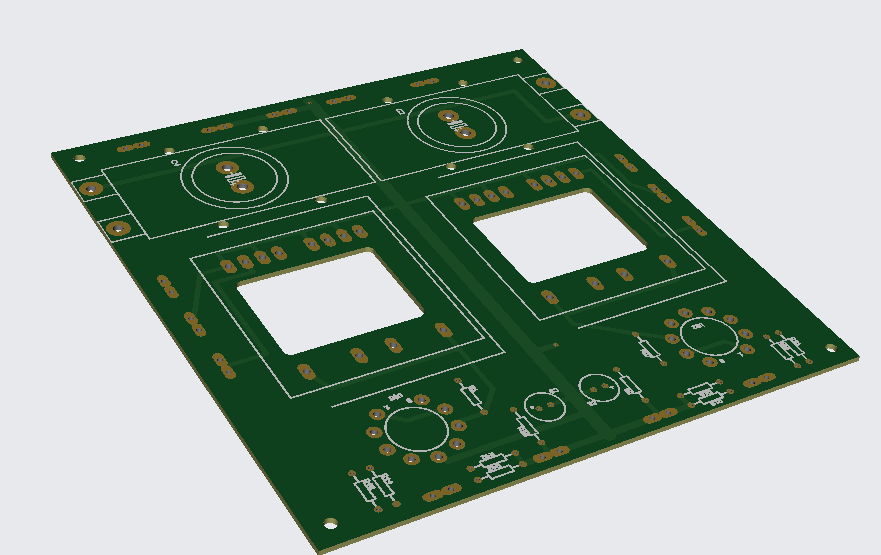
PCB
Although point-to-point wiring is possible, I suggest using my dedicated PCB.
This approach eliminates potential wiring errors and guarantees perfectly
optimized signal paths.
Unfortunately, the Chinese manufacturer who produced
and sold my PCBs for many years has gone out of business, so you will now need
to produce them on your own. Fortunately, ordering PCBs has become incredibly
easy in recent years. On websites like jlcpcb.com,
you simply need to drag and drop the ZIP file I’ve provided, place the order,
and it will be delivered to your doorstep in just a few days.

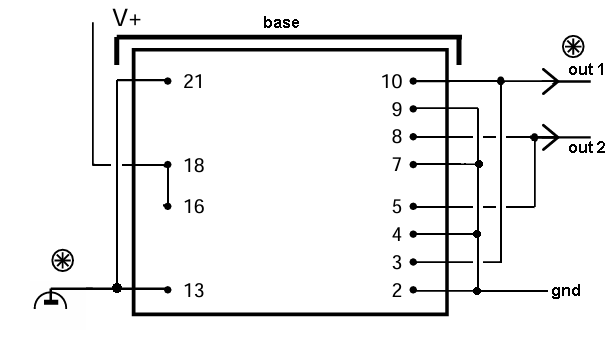
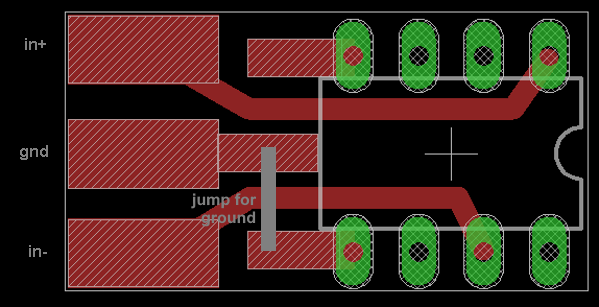
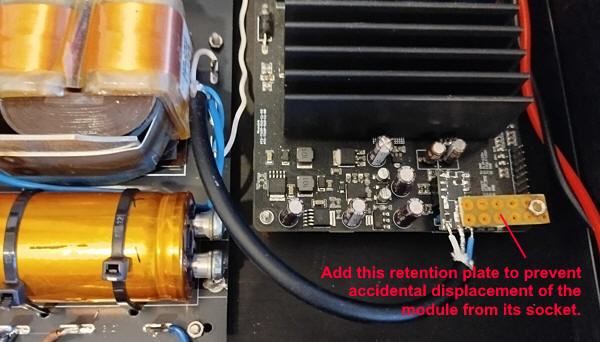
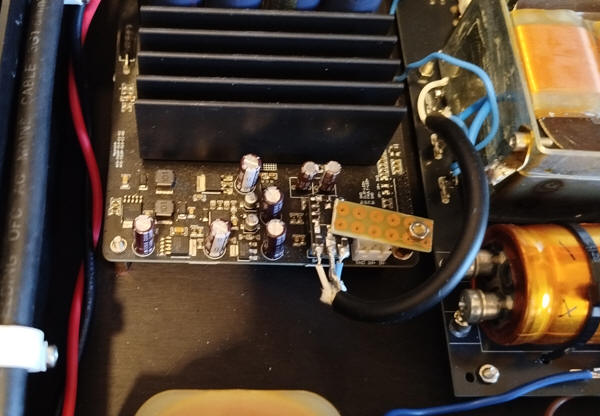
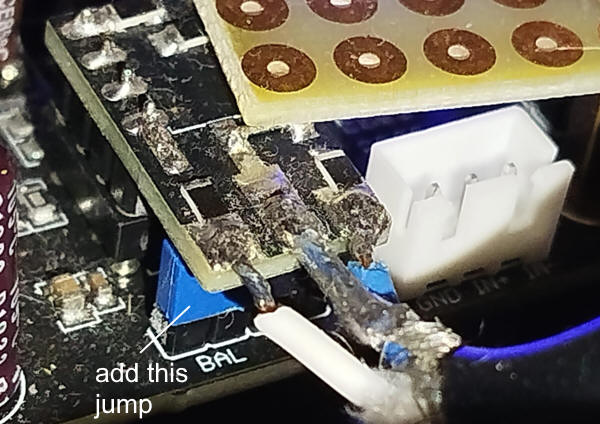
You can use this little module to connect
the tube preampl. to the opamp output of D400 (use
only with TPA3255 modules with dual power supply, ex. +12V / -12V or invert the
interstage capacitors in the correct direction).
The first version
include an attenuator about -6dB to reduce the voltage gain of the final system,
to verify if it is necessary.
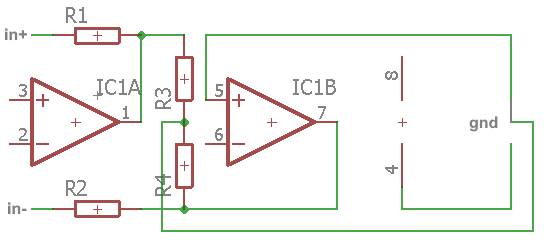
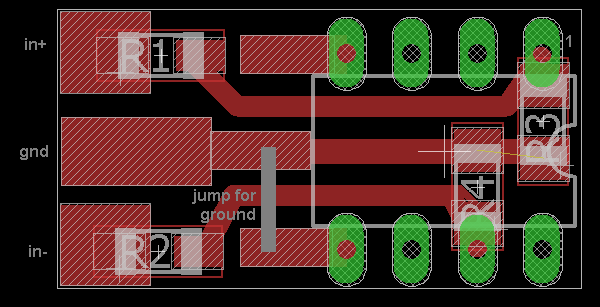
R1,R2,R3,R4 2700ohm
1/4W SMD 1206
IC
2 x 4 Single row connectors 2,54mm
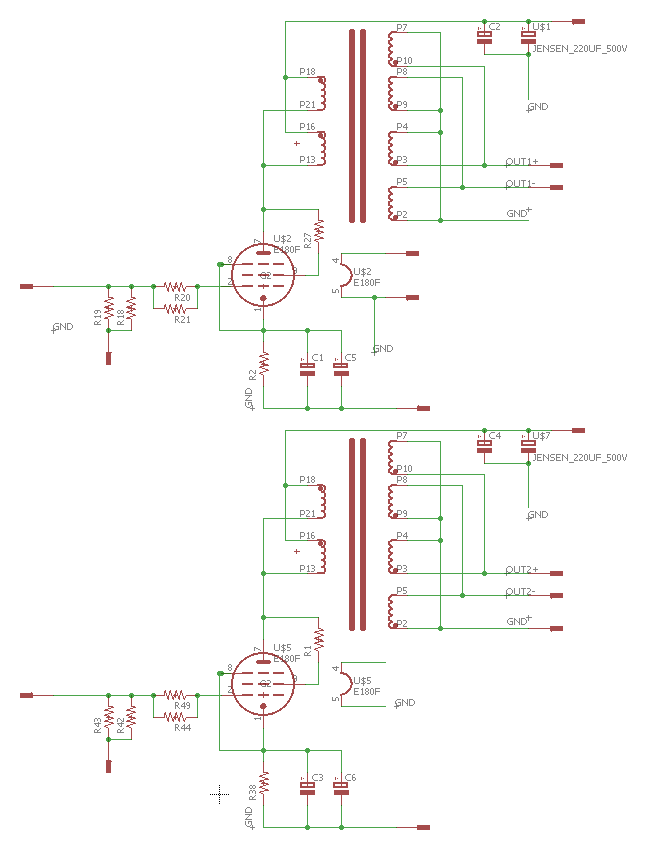
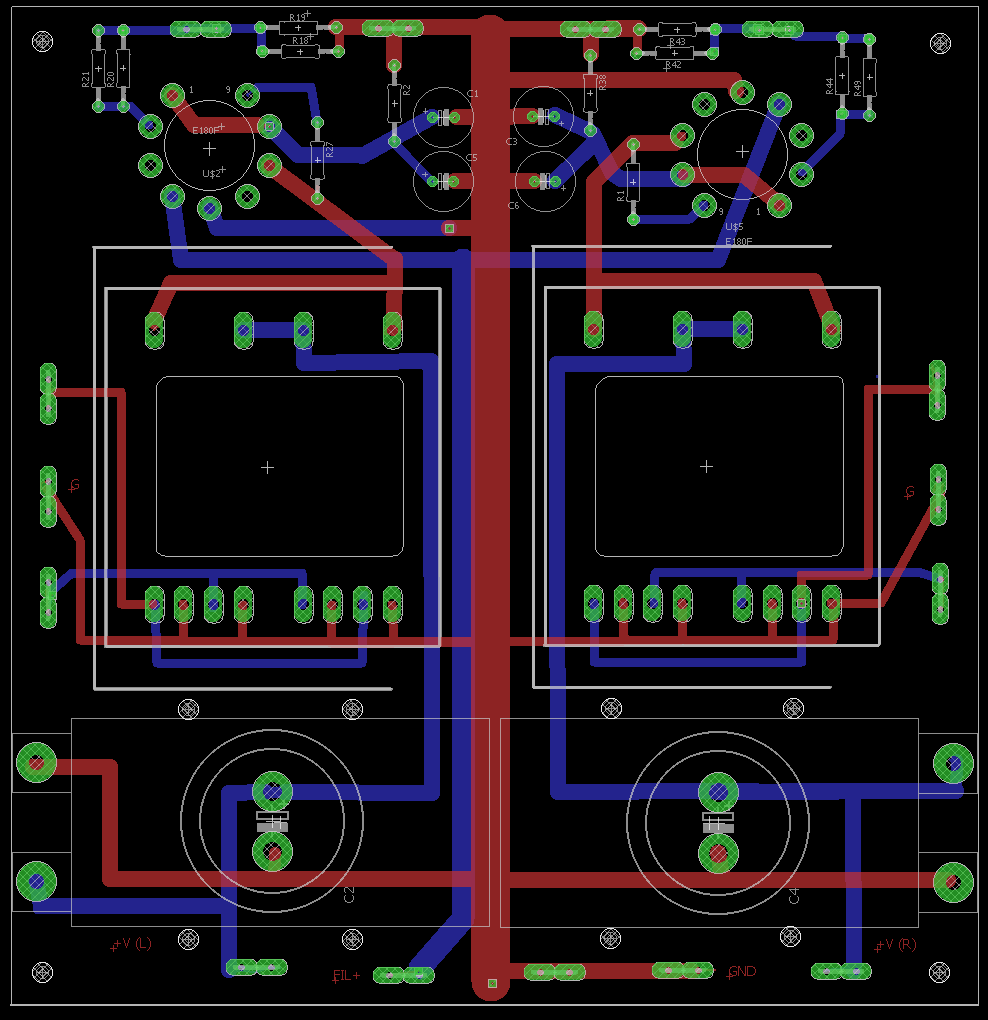
R42,R43,R18,R19 220K 1/4W
Vishay Dale RN55
R20,R21,R44,R49
2K 1/4W
Vishay Dale RN55
R2,R38
100ohm 1/4W
R1,R27
47ohm 1W
C1,C3
330uF 6.3V ELNA Silmic II
C5,C6
47uF 6.3V ELNA Silmic II
C2,C4 220uF 500V Jensen elect.
(old stock)
220uF 160V
Audio
Note Kaisei (to use this reduce the transf. secondary)
TR1,TR2
LL2763/7mA
U$2,U$5
E180F + noval socket
The connections are 63862-1 (CUT STRIP) by TE Connectivity / AMP (cod. Mouser 571-63862-1-CT, cod. RS 718-7987)
The Vishay Dale RN55 are mounted in a reverse-parallel (anti-inductive) configuration to minimize parasitic inductance.
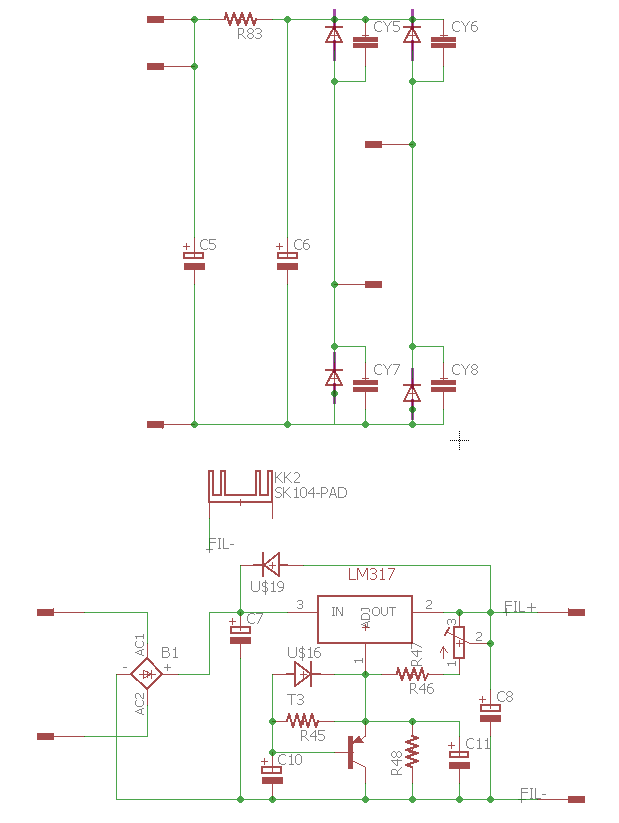
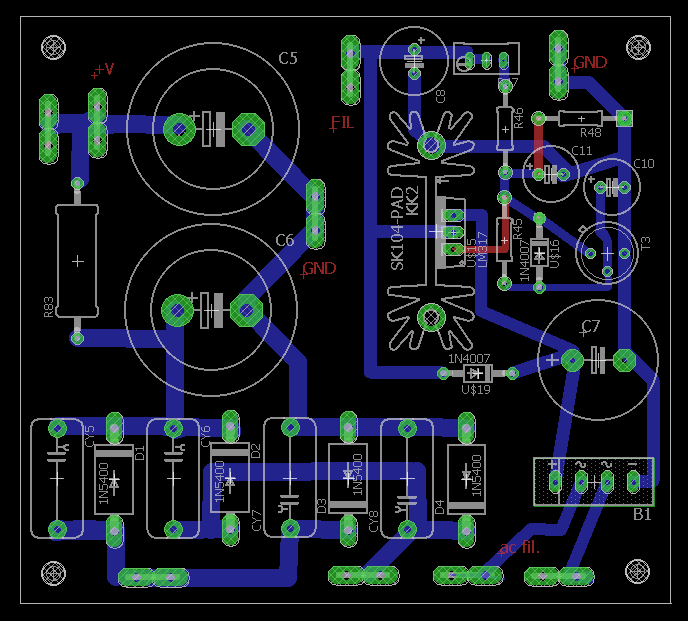
R45
68K 1/4W
R46 220ohm 1/4W
R48 1K 1/4W
R83 220//220ohm 3W PR03
(2 x 220ohm in parallel)
TR1
100ohm multi turns trimmer
CY5,6,7,8 0.01uF
300VAC WIMA MP3-X1 10N
C7 4700uF 16V
C10,C11,C8
220uF 16V
C5,6 270uF
250V or any good cap. with min 220uF
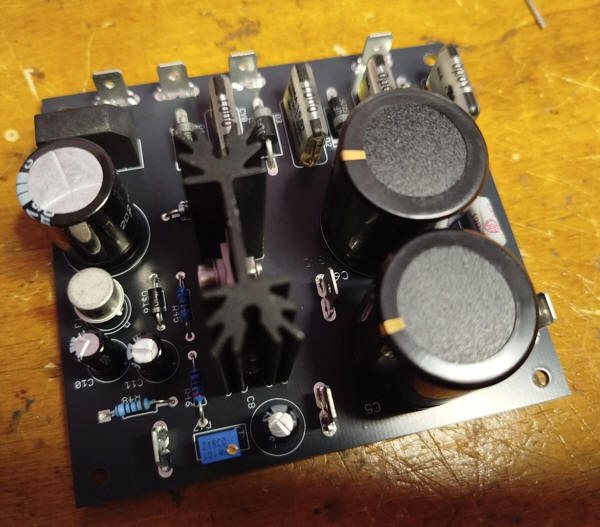
D1,D2,D3,D4 UF5407
U$19,U$16 1N4007
B1 diode bridge 100V 2A 2KBP01
T3 2N2904,
2N2905, 2N2907
U$15 LM350
The connections are 63862-1
(CUT STRIP) by TE
Connectivity / AMP (cod. Mouser 571-63862-1-CT, cod. RS 718-7987)
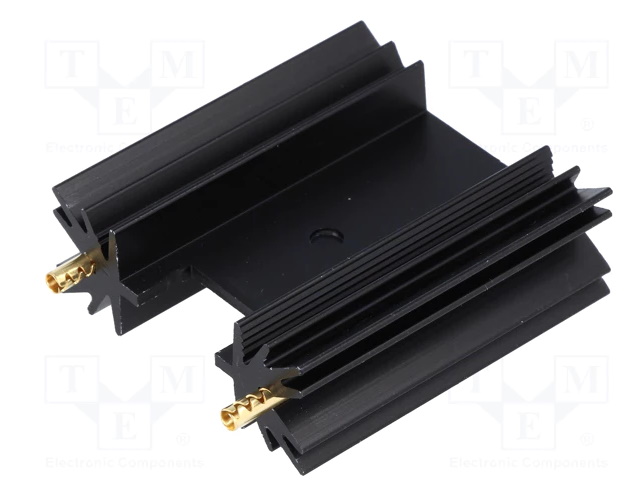
KK2 Heatsink type SK104 or EA-T220-38E compatible L=38mm Thermal resistance = 7.5K/W
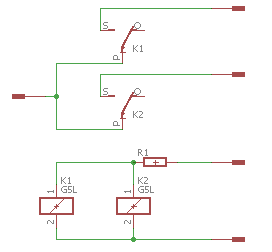
ollow the relay module to switch-on the amplifier with a low current button.
 |
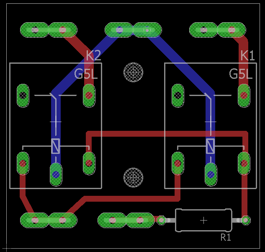 |
Here the file to produce this pcb.
R1 22ohm
2W
K1,K2 relay SRU-05VDC -SL-C
CABLES
The
internal cables used are the Canare L-2T2S High performance Microphone cable
shielded 0.26mm² and 4S11G STAR QUAD Speaker cable OFC Copper 4x2.08mm², both
with with insulation PE Polyethylene.
CHASSIE
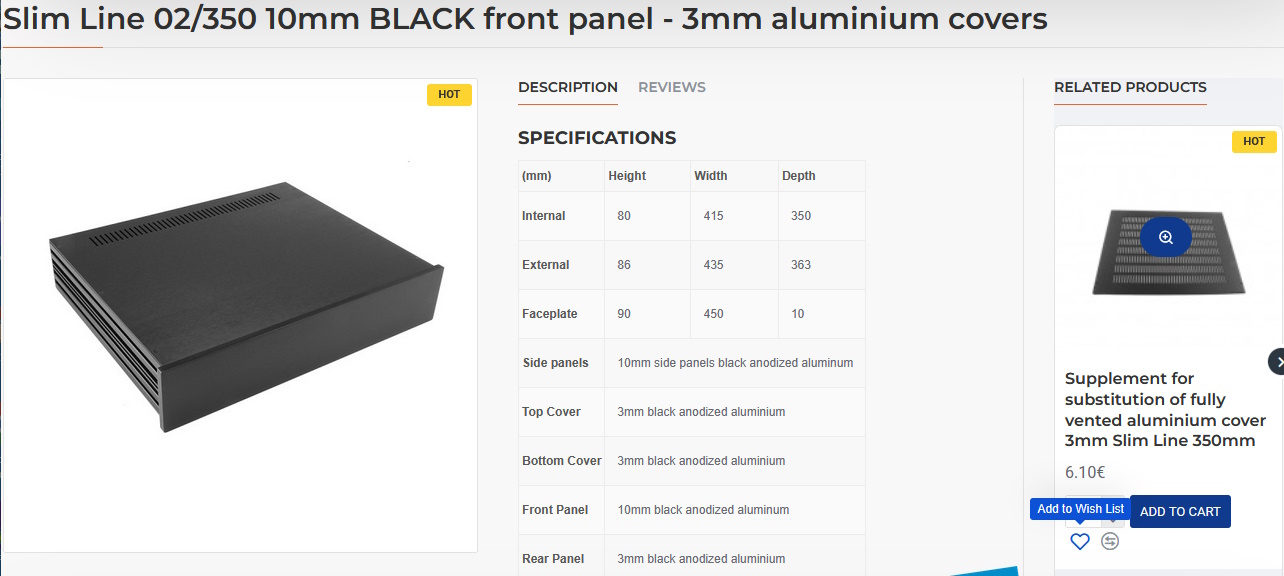
I will use this Hi-Fi2000 chassie.
Slim Line 02/350 10mm BLACK front panel - 3mm aluminium covers
Supplement for substitution of fully vented aluminium cover 3mm Slim Line 350mm
TUBE DRIVER MEASUREMENTS
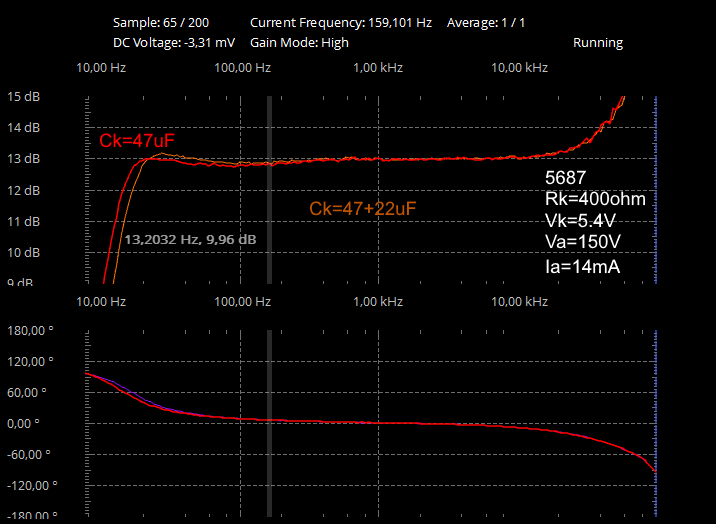
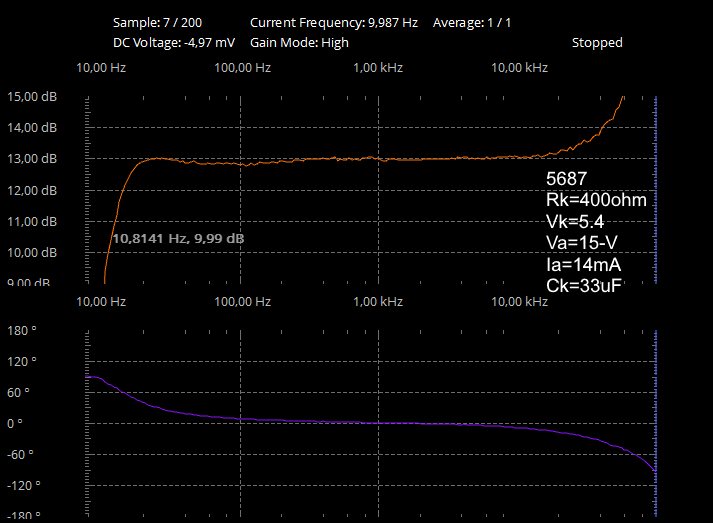
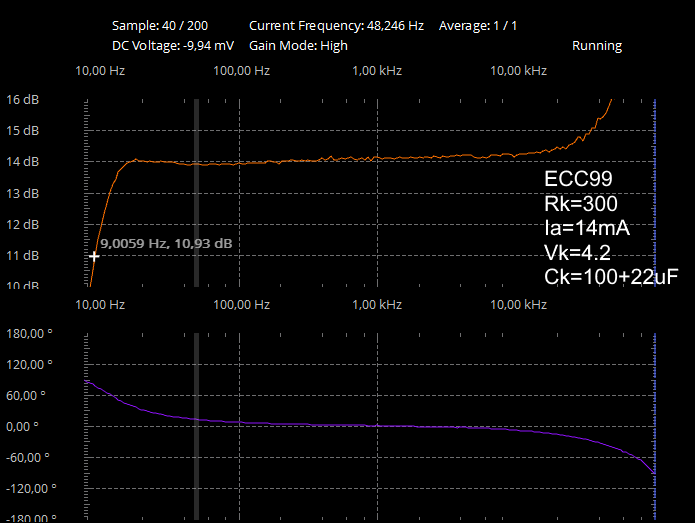
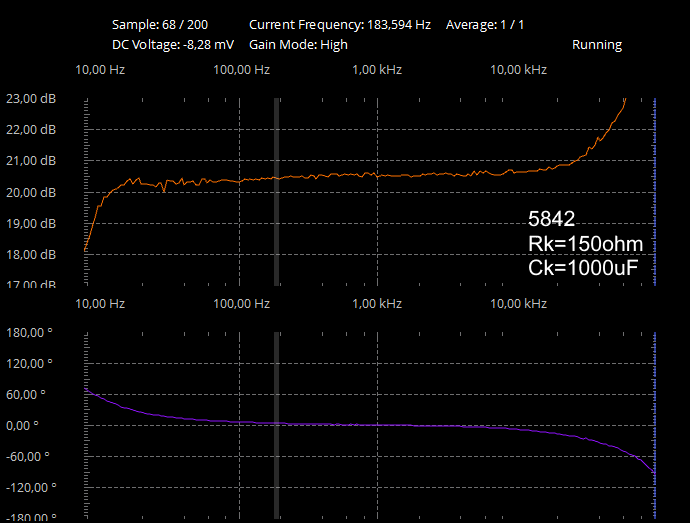
The E180F in triode connection and the 5687 give a good low distortion < 0.3%
and a perfect 20Hz - 20KHz at 0dB.
Using the E180F is necessary an attenuator
after the interstage transformer to reduce the voltage gain.
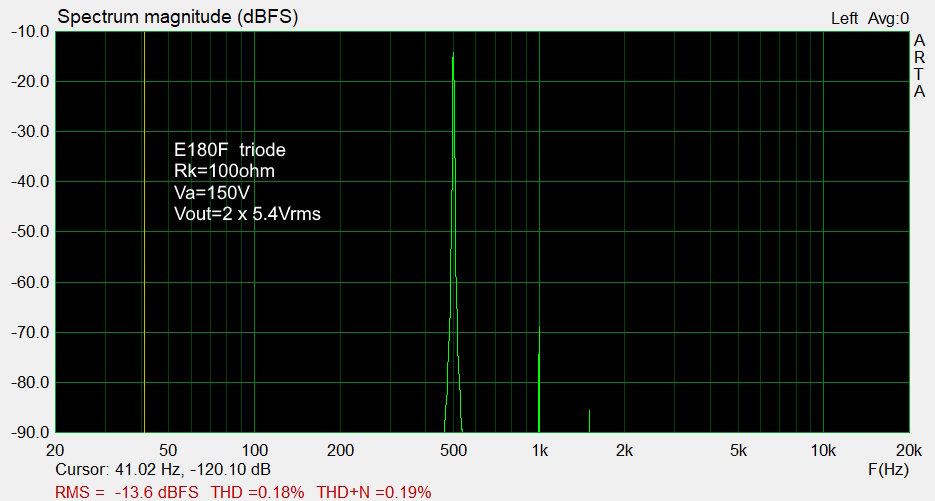
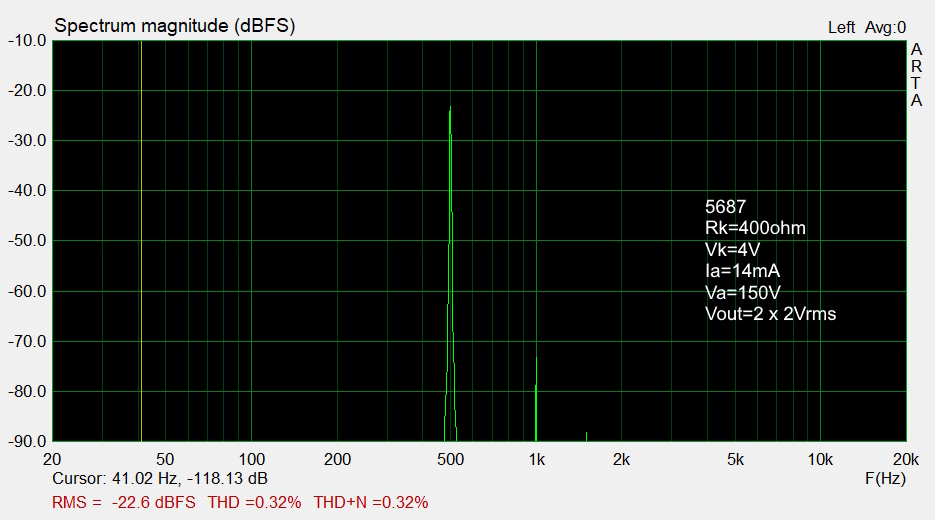
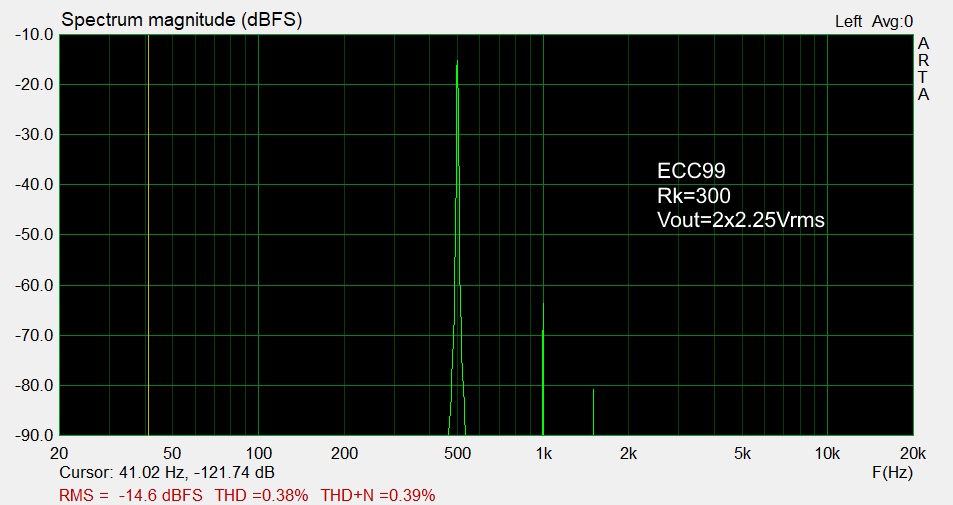
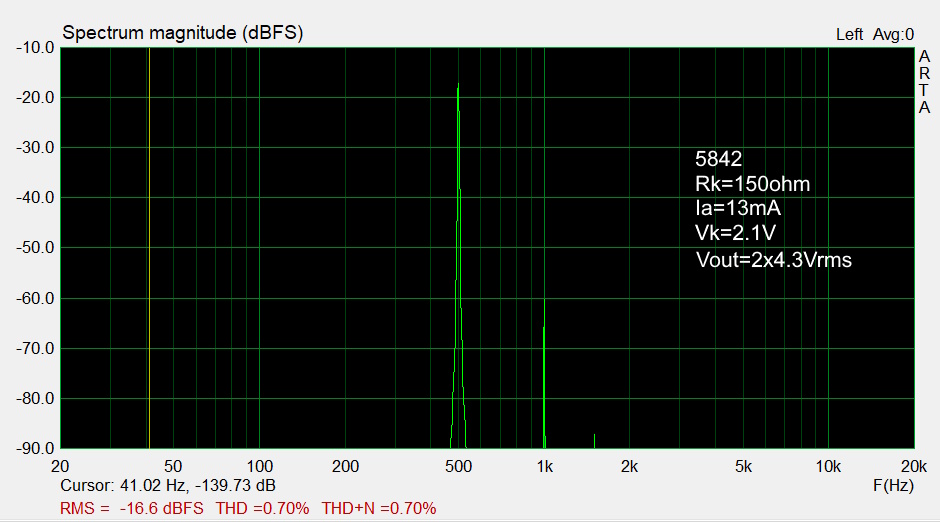
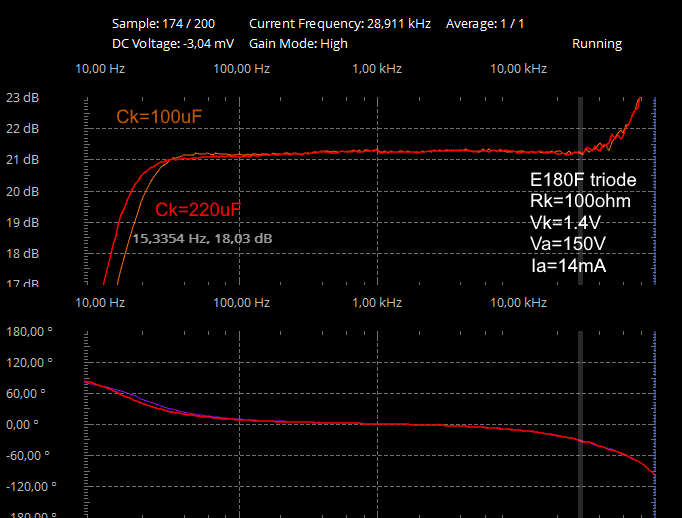
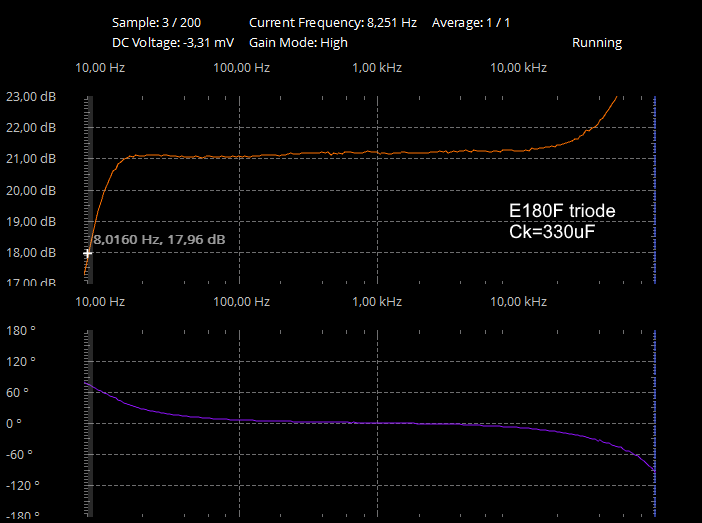
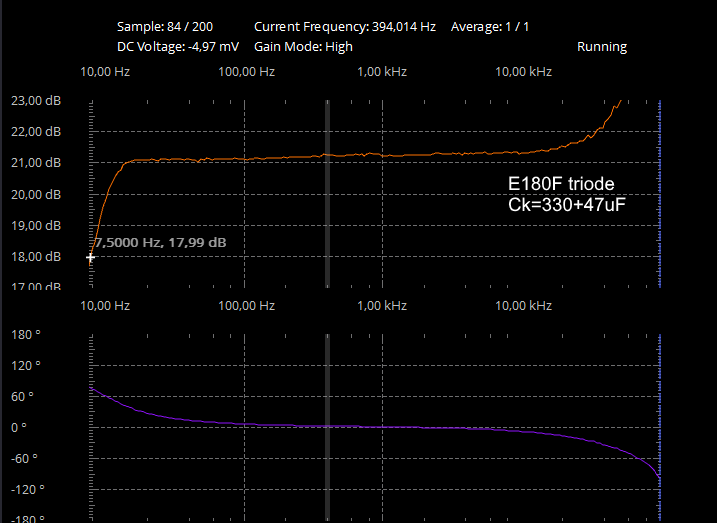
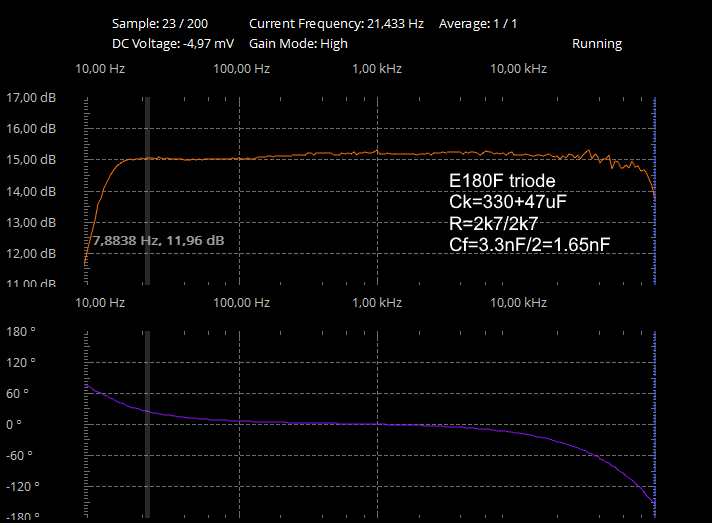
In this test I added a temporary capacitor to the output just to observe the
high-frequency roll-off.
This component is not used in the final version.
DETAILS
please look all to have no problems
phase 0 - first listening test to make a direct comparison with the previous differential preamplifier
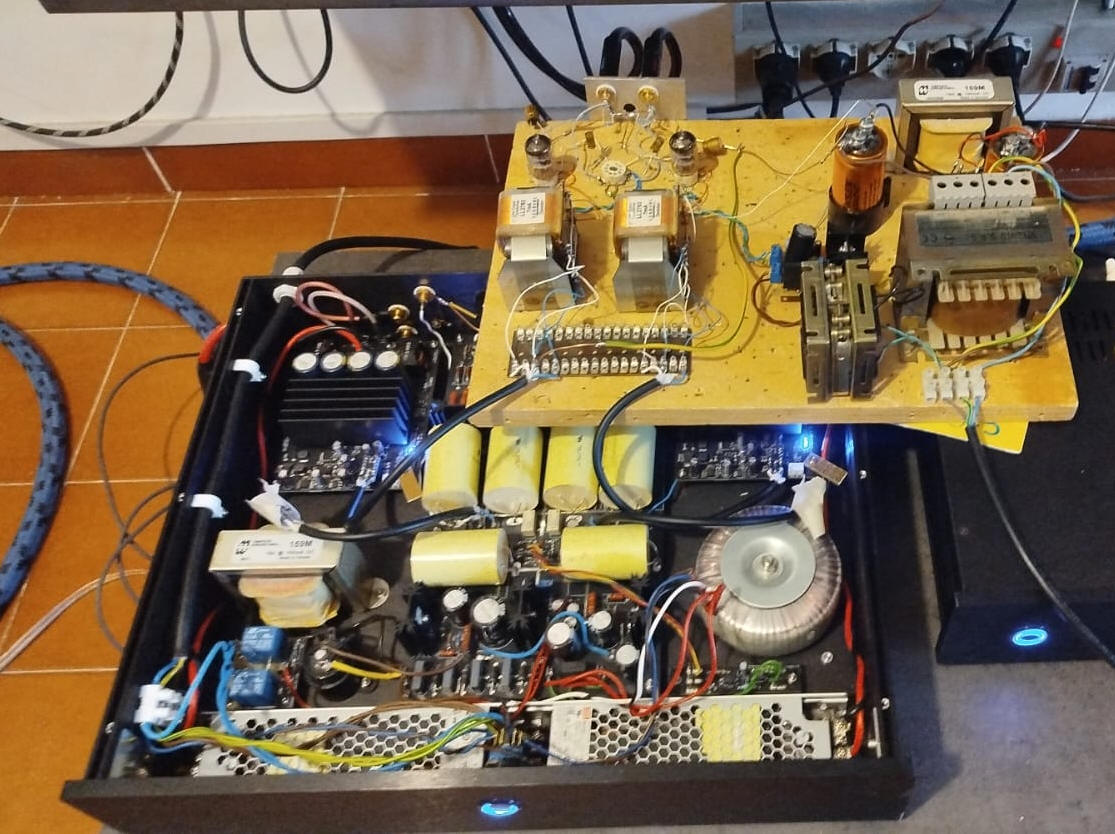
phase 1 - the pcb are ready so second listening test waiting the power supply transformer
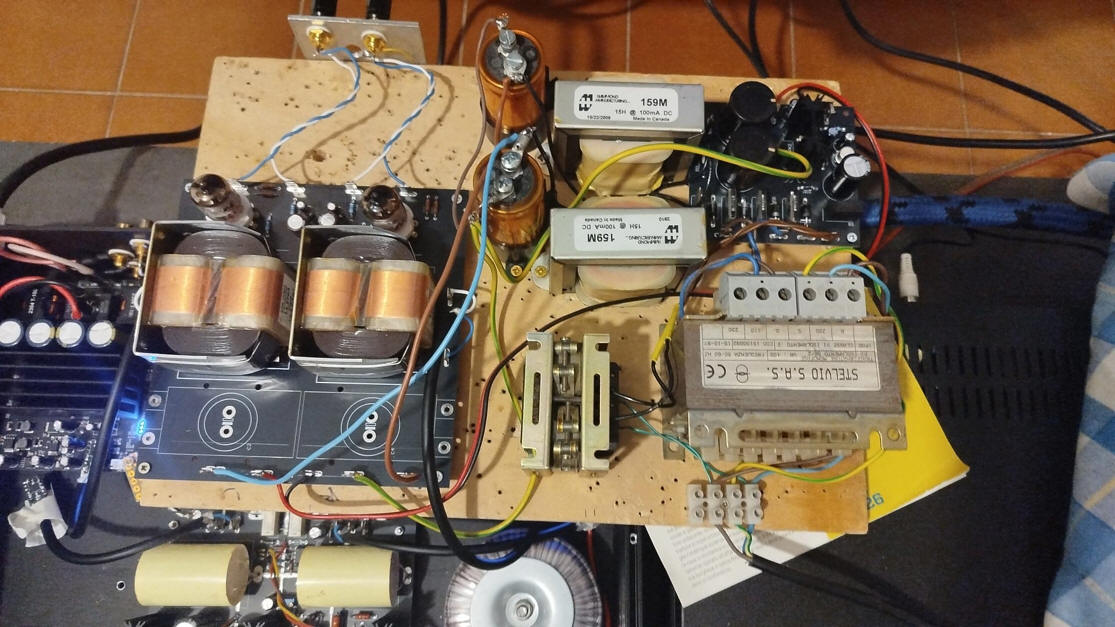
phase 2 - final power supply transformer installed now we can test the power supply capacitors
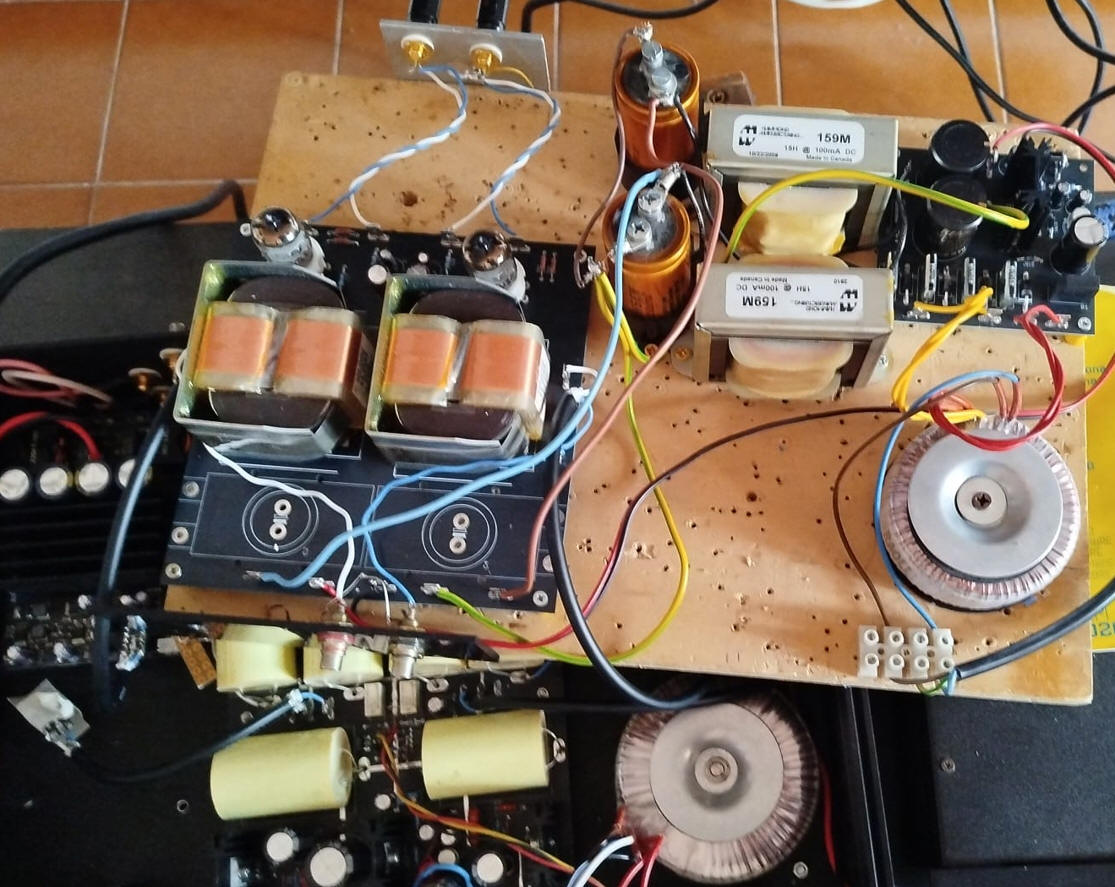
phase 3 - final integration waiting the delay modules
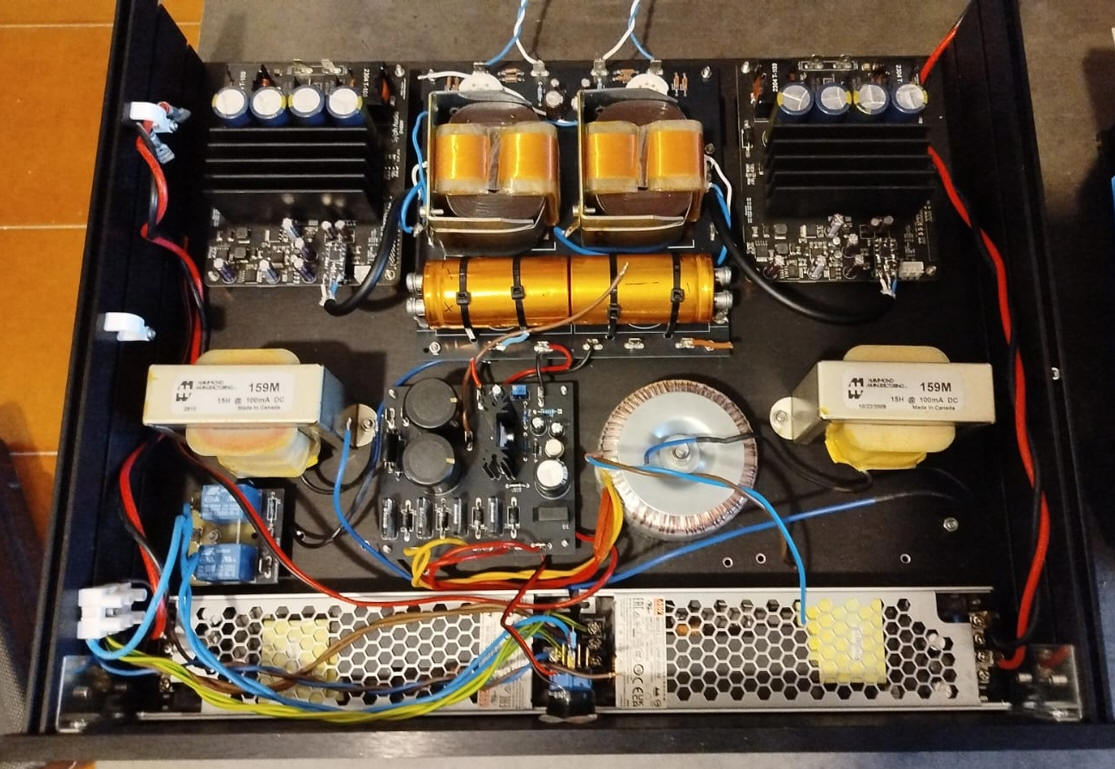
Ensure the interstage transformer chassis are connected to the ground point.
TOTAL COST
| description | unit price | quantity | total (euro) |
| Sylphaudio D400M P05 | 120 | 2 | 240 |
| Meanwell UHP-200-48 | 60 | 2 | 120 |
| Lundahl LL2763/7mA | 157 | 2 | 310 |
| Hammond 159M | 40 | 2 | 80 |
| Tube pre-ampl components (pcb,tube,cap.,...) | 100 | 1 | 100 |
| Audio note Kaisei 220uF 160V | 70 | 2 | 140 |
| Chassie | 150 | 1 | 150 |
| Tube pre-ampl power transformer | 65 | 1 | 60 |
| total | 1200 |